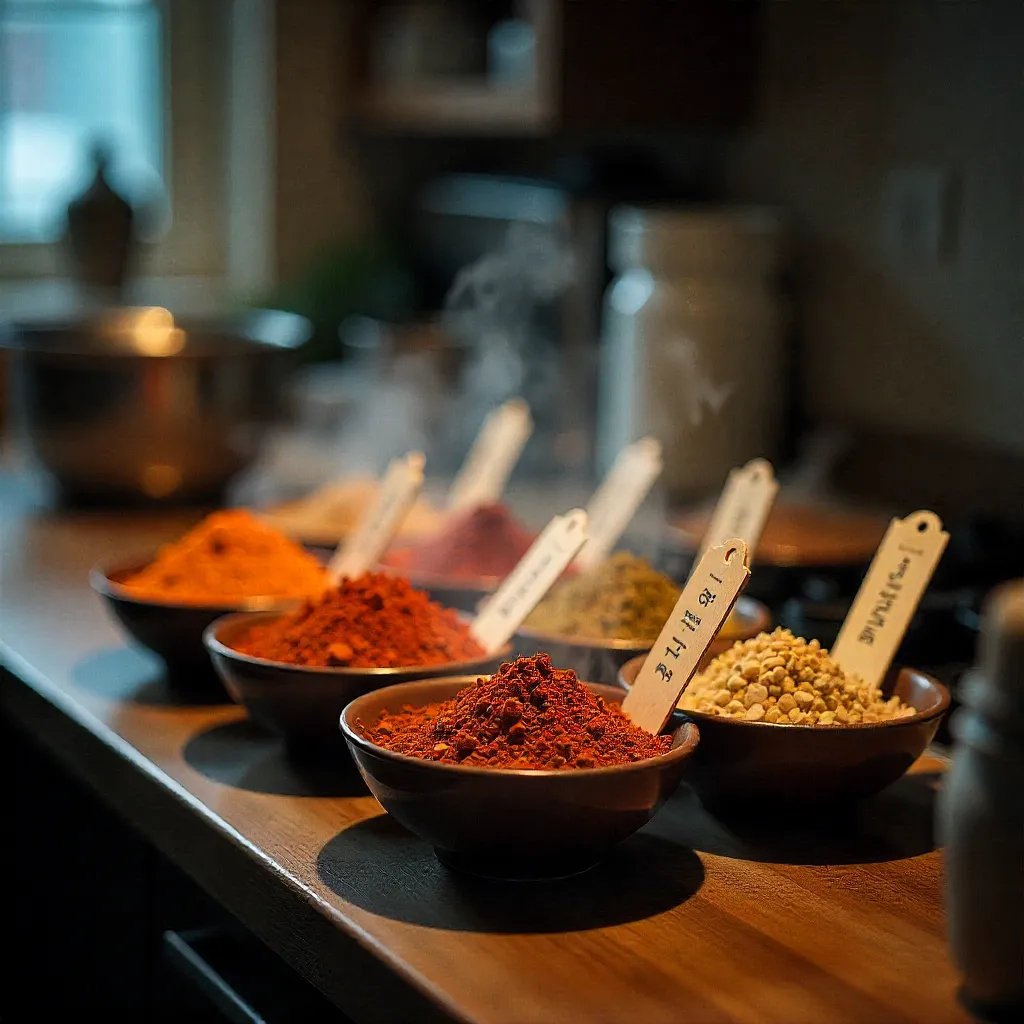
Temperature Response Patterns
Each spice contains volatile compounds that activate at specific temperature thresholds. These activation points determine when and how to introduce spices during cooking for maximum flavor extraction.
Visualizing these patterns as heat maps shows the relationship between temperature, time, and flavor release. Understanding these dynamics enables precise control over the cooking process.

Heat Application Methods
Dry Heat
Roasting or toasting spices in a dry pan activates certain compounds through direct heat transfer. This method intensifies earthy and nutty notes while reducing moisture content.
Oil Infusion
Heating spices in oil allows fat-soluble compounds to dissolve and distribute evenly. This method extracts aromatic oils that carry flavor throughout the dish.
Aqueous Extraction
Adding spices to water-based liquids at specific temperatures releases water-soluble compounds. Timing is critical to avoid over-extraction of bitter components.
Critical Temperature Zones
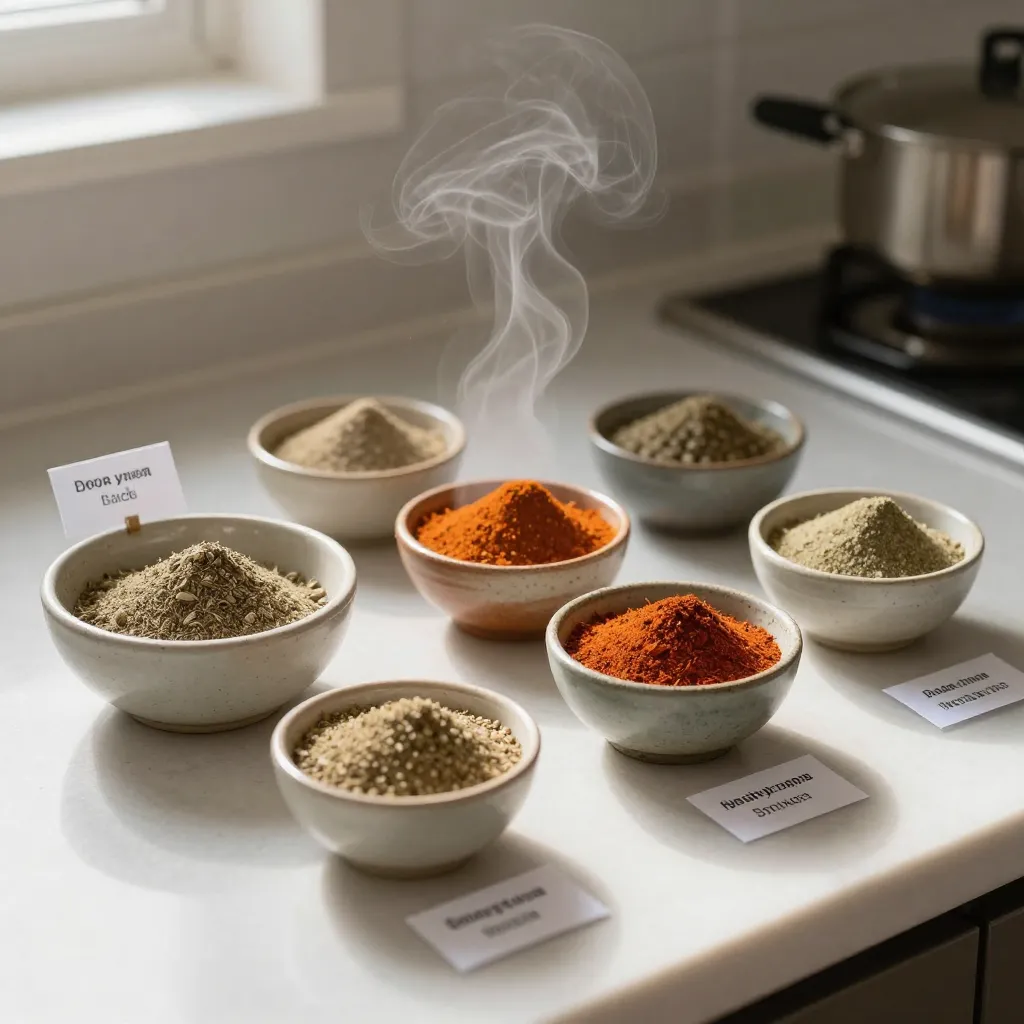
Different spice compounds have distinct activation temperatures. Low-temperature zones (100-150°C) preserve delicate aromatics, while higher zones (150-200°C) develop deeper, more complex flavors.
Some spices benefit from multi-stage heating, where initial low heat prepares compounds for subsequent higher-temperature activation. This technique creates layered flavor profiles.
Protocol Implementation
Pre-Heating Phase
Gradual temperature increase allows volatile compounds to release progressively, preventing sudden flavor loss or bitterness development.
Active Infusion
Maintaining optimal temperature ranges for specific durations ensures complete compound extraction without degradation.
Cooling Integration
Proper cooling methods preserve extracted compounds and prevent flavor loss during the transition to final dish preparation.